Global web icon
mathsisfun.com
https://www.mathsisfun.com/algebra/polynomials.htm…
Polynomials - Math is Fun
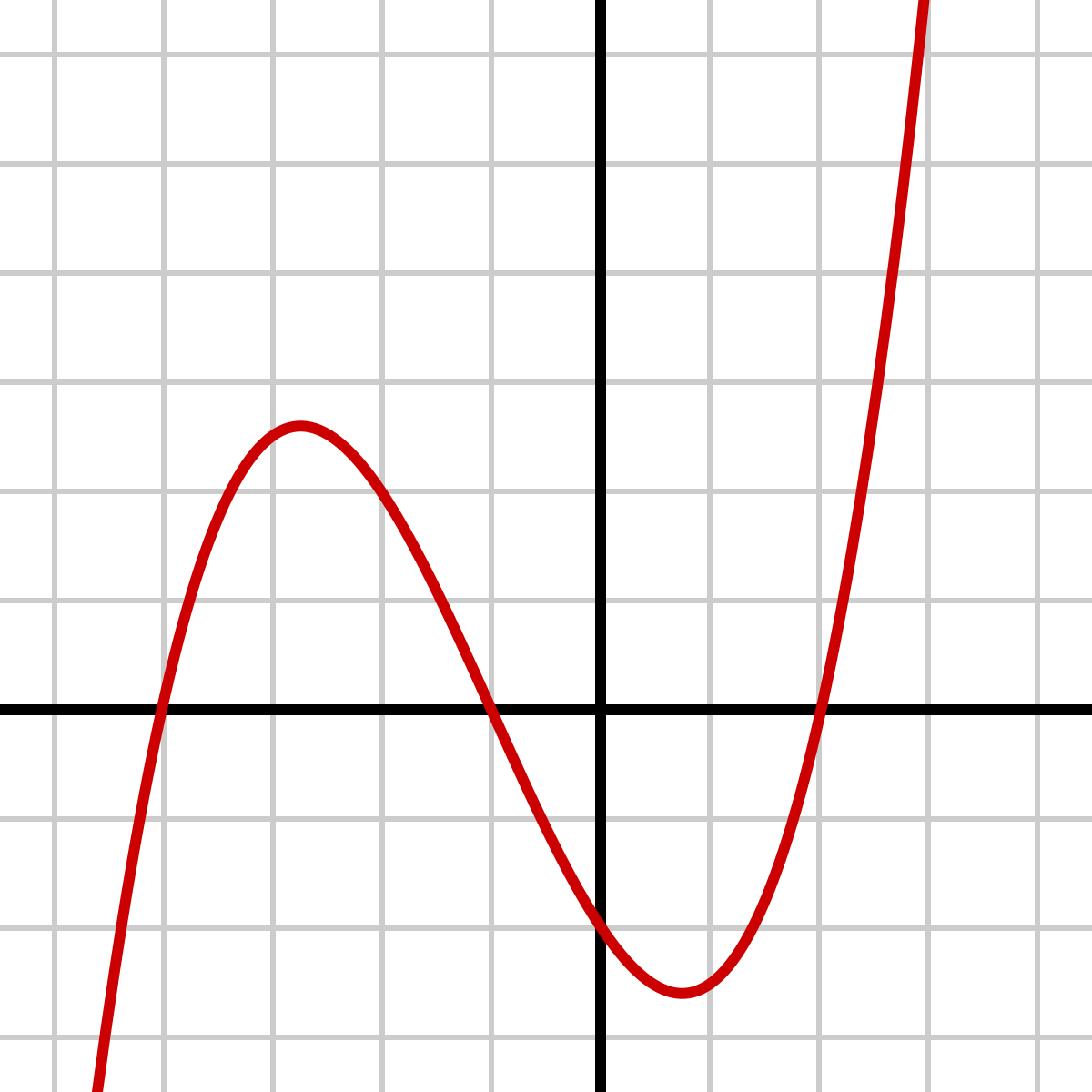
Because of the strict definition, polynomials are easy to work with. For example we know that: So we can do lots of additions and multiplications, and still have a polynomial as the result. Also, polynomials of one variable are easy to graph, as they have smooth and continuous lines. Example: x4−2x2+x. smooth the curve is?
Global web icon
wikipedia.org
https://en.wikipedia.org/wiki/Polynomial
Polynomial - Wikipedia
In advanced mathematics, polynomials are used to construct polynomial rings and algebraic varieties, which are central concepts in algebra and algebraic geometry. The word polynomial joins two diverse roots: the Greek poly, meaning "many", and the Latin nomen, or "name".
Global web icon
cuemath.com
https://www.cuemath.com/algebra/polynomials/
Polynomials - Definition, Meaning, Examples | What are ... - Cuemath
What are Polynomials? Polynomials are mathematical expressions made up of variables and constants by using arithmetic operations like addition, subtraction, and multiplication.
Global web icon
khanacademy.org
https://www.khanacademy.org/math/algebra-home/alg-…
Polynomial expressions, equations, & functions | Khan Academy
Test your understanding of Polynomial expressions, equations, & functions with these 35 questions.
Global web icon
mathmonks.com
https://mathmonks.com/polynomials
Polynomials - Definition, Standard Form, Terms, Degree, Rules, & Examples
Polynomial comes from ‘poly-’ (meaning ‘many’) and ‘-nomial’ (meaning ‘terms’). A polynomial is a mathematical expression consisting of two main parts, variables and constants, joined together by mathematical operators like addition, subtraction, and multiplication.
Global web icon
geeksforgeeks.org
https://www.geeksforgeeks.org/maths/polynomials/
Polynomials| Degree | Types | Properties and Examples
Polynomials are mathematical expressions made up of variables (often represented by letters like x, y, etc.), constants (like numbers), and exponents (which are non-negative integers).
Global web icon
lamar.edu
https://tutorial.math.lamar.edu/Classes/Alg/Polyno…
Algebra - Polynomials - Pauls Online Math Notes
In this section we will introduce the basics of polynomials a topic that will appear throughout this course. We will define the degree of a polynomial and discuss how to add, subtract and multiply polynomials.
Global web icon
purplemath.com
https://www.purplemath.com/modules/polydefs.htm
Polynomials: Their Terms, Names, and Rules Explained
Polynomial are sums (and differences) of polynomial "terms". For an expression to be a polynomial term, any variables in the expression must have whole-number powers (or else the "understood" power of 1, as in x1, which is normally written as x). A plain number can also be a polynomial term.
Global web icon
mathnasium.com
https://www.mathnasium.com/math-centers/cherrycree…
What Is a Polynomial? Everything You Need to Know
In this middle-school-friendly guide, we explain what polynomials are, explore how to work with them, and practice solving polynomial problems together.
Global web icon
brilliant.org
https://brilliant.org/wiki/polynomials/
Polynomials | Brilliant Math & Science Wiki
Polynomials represent numbers, and as such, any mathematical operation can be performed on polynomials just as they are done on numbers. When polynomials are added, subtracted, or multiplied, the result is another polynomial.