For example, you lay out a collection of chips, count them together and then ask a small group of children to tell you how many are left after they see you removing some of the chips.
DAP is widely used in early childhood education settings, such as preschools, daycare centers, and kindergarten classrooms, to create developmentallyappropriate curricula and teaching methods that promote positive outcomes for young children.
This article will dive into practical examples that illustrate how to implement developmentallyappropriatepractices in your classroom. You’ll discover strategies that cater to various age groups and developmental stages, ensuring each child receives the support they need to thrive.
In this article, we’ll provide developmentallyappropriatepractice (DAP) examples of how you can bridge the gap between theory and practice. Get more tips on managing your centers and classrooms.
In a classroom setting, developmentallyappropriatepractice (DAP) involves taking into account the developmental levels and needs of individual children and adapting instruction and activities to meet those needs.
This blog post explores developmentallyappropriatepractice, a core tenet of early childhood education. Author Emily Grunt explores the history of the term and provides examples of developmentallyappropriatepractices in action.
DAP is a dynamic balance of child-led learning and intentional teaching tailored to age, individual needs, and culture. 12 effective strategies include play-based learning, scaffolding, differentiated instruction, and responsive interactions. Family engagement and cultural responsiveness are essential pillars for authentic learning experiences.
DevelopmentallyAppropriatePractice (DAP) refers to teaching methods grounded in child development research. This article is a comprehensive guide for educators to effectively understand and apply DAP principles in early childhood education.
These can be described as best practices, thoughtful teaching, quality practices, or DevelopmentallyAppropriatePractices (DAP). DAP comes from a deep history in early education, research, and what many describe as "good thinking."
Developmentallyappropriatepractice recognizes and supports each individual as a valued member of the learning community. As a result, to be developmentallyappropriate, practices must also be culturally, linguistically, and ability appropriate for each child.
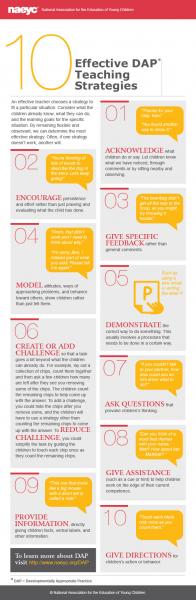 For example, you lay out a collection of chips, count them together and then ask a small group of children to tell you how many are left after they see you removing some of the chips.